


Showing all 5 results
Filter by price
Paint Thickness Gauges


Paint Thickness Gauge R&D TC-200
In stock

Paint Thickness Gauge RD-TC100
In stock
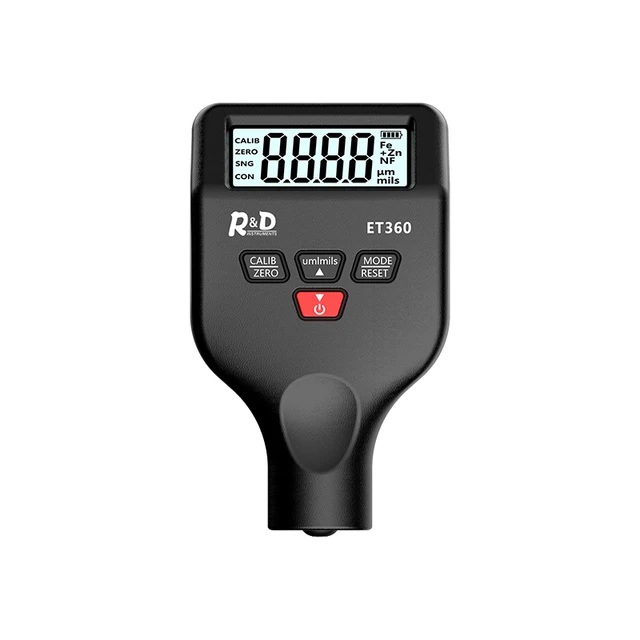
Paint Thickness Tester ET-360
In stock

A paint thickness gauge is a tool that measures the thickness of a car’s paint layer in microns (μm). Its main purpose is to reveal whether a panel carries its original factory finish or has been resprayed — in other words, whether the car has been in an accident or repaired. The tool is also known as a coating meter or paint gauge.
Read more
How a paint thickness gauge works
The gauge touches the panel and measures the distance from the paint surface down to the metal underneath. On steel it uses magnetic induction; on aluminium it uses the eddy current method. A reading takes about a second and appears on the screen in microns. The measurement is non-destructive and leaves no mark.
Fe and nFe — what is the difference
Fe stands for steel, nFe for non-ferrous metals, primarily aluminium. A cheaper Fe-only model will read zero on an aluminium bonnet or wing because it simply cannot measure that surface.
Most modern cars use aluminium panels — bonnet, boot lid, wings. For inspecting a used car you therefore need a dual-sensor (Fe/nFe) model; otherwise the very panels that are replaced most often are the ones you cannot check.
What thickness is normal
A factory paint layer is usually 80–150 μm. A reading above 200 μm suggests the panel has been resprayed. Above 300 μm often indicates body filler, meaning the panel has been repaired.
Do not read too much into the absolute number. Some factory finishes — metallics and pearlescents in particular — are thicker from new and can reach 180 μm. German cars generally leave the factory with a thicker layer than Japanese ones. What matters is the difference between panels, not the figure itself: if every panel reads 120–140 μm and one reads 260, that single panel is the resprayed one.
How to inspect a car step by step
Measure every panel separately: bonnet, both front wings, all four doors, boot lid and roof. Take three or four readings on each — near the top, in the middle and close to the edge.
Write the figures down, then compare them. Symmetrical panels — left and right wing, left and right doors — should read almost the same. A large gap means one of them has been worked on.
Which model to choose
The right choice depends on how often you will use the tool.
For occasional use — buying a single car, for example — a basic model is enough. The Paint Thickness Gauge RD-TC100 costs under 200 GEL and handles the core task well.
For regular use — a dealership, a car importer, an appraiser — a faster and more durable model makes sense: the R&D TC-200 or the Paint Thickness Tester ET-360.
For professional accuracy — expert inspection, insurance assessment — the ETARI ET-700 Max is the top model in this range.
Measuring body filler is a separate task: once you already know a panel has been repaired, you may need to know how thick the filler layer is. The putty thickness gauge is designed for that.
Exact measuring range, accuracy and contents are listed on each product page. For other inspection equipment see the diagnostic tools section.
Frequently asked questions about paint thickness gauges
What is a paint thickness gauge?
A paint thickness gauge is a tool that measures the thickness of a car’s paint layer in microns. It shows whether a panel carries its original factory finish or has been resprayed.
What paint thickness is normal?
A factory layer is usually 80–150 μm. Above 200 μm suggests a respray, and above 300 μm often indicates body filler. Some factory finishes, especially metallics, are thicker from new.
Is a coating meter the same as a paint thickness gauge?
Yes. Coating meter, paint gauge, paint thickness tester and the Russian term tolshchinomer all describe the same tool.
What is the difference between Fe and nFe sensors?
Fe measures steel panels, nFe measures aluminium and other non-ferrous metals. A dual-sensor model reads both. Modern bonnets and wings are often aluminium, so a dual-sensor model is needed to inspect a used car properly.
How many points should I measure?
Take three or four readings on each panel and check every panel separately. Then compare symmetrical panels against each other — the difference between them is what reveals a resprayed area.
Does measuring damage the paint?
No. The gauge simply rests against the surface and leaves no mark. The measurement is non-destructive and does not affect the paint.
Does it work on plastic bumpers?
Standard magnetic and eddy current gauges do not work on plastic because they need a metal substrate. Inspecting plastic panels requires an ultrasonic instrument.
How much does a paint thickness gauge cost?
Basic models start from around 200 GEL, while professional units cost over 500 GEL. The difference lies mainly in accuracy, measuring speed and sensor type. Current prices are shown on the product pages.