

Showing the single result
Filter by price
Microphones
Microphones for recording high-quality sound
A good video is not created by high-quality footage alone. Clean sound and clearly recorded speech are just as important as lighting and camera quality. That is exactly why a suitable microphone is needed for creating videos, interviews, online lessons, social media content, presentations, and other types of audio and video material.
Read more
At TechnoKing you can choose a lavalier microphone for recording video and speech. This type of microphone is compact, clips onto clothing, and sits close to the source of the speech. Compared with the built-in microphone of a camera or phone, using an external microphone is especially practical when the speaker is a certain distance away from the device. When choosing the right microphone, it is important to consider where you plan to record, which device you are using, how far away the camera will be, and what type of content you are creating.
What is a lavalier microphone?
A lavalier microphone is a small microphone that is usually clipped onto clothing. It is also called a lavalier (clip-on) microphone or a lavalier microphone. Its main advantage is that the microphone sits relatively close to the speaker’s mouth. As a result, the distance of the camera or phone has less effect on the sound recording. A lavalier microphone is especially practical when a person needs to move freely in front of the camera and does not want to hold a microphone in hand. This type of microphone is widely used in interviews, video blogs, online lessons, presentations, and various kinds of conversational content.
Lavalier (clip-on) microphone for video
A lavalier (clip-on) microphone for video is a good choice when the main element of the video is a person speaking. For example, if you are filming a product review, an educational video, an interview, or content to be published on social media, it is essential for the viewer to hear the speech well. A phone’s or camera’s built-in microphone may pick up both a person’s voice and various noises in the room at the same time. A lavalier microphone, on the other hand, is placed close to the speaker and creates a more targeted position for recording the audio. The final result also depends on the room’s acoustics, the placement of the microphone, and the recording settings.
Microphone for a phone
Today, a large share of videos for social media is created with a smartphone. Modern phones have good cameras, but the sound is not always recorded perfectly when shooting video. A microphone for a phone is especially practical when the phone is placed away from the speaker. For example, if the phone is on a tripod and a person is speaking a few metres away, the phone’s built-in microphone will also record the room’s sound quite actively. In the case of a lavalier microphone, the microphone is placed directly on the person. Before using the microphone with a specific smartphone, it is essential to check connector compatibility. Some modern phones no longer have a 3.5 mm audio jack, and in that case a suitable adapter may be needed.
Microphone for a camera
A microphone for a camera is especially important during videography and content creation. If the camera is a certain distance away from the speaker, the built-in microphone may record the surrounding sound along with the speech. Using an external microphone makes it possible to place it closer to the audio source. This is especially practical during interviews, lectures, presentations, and speaking in front of the camera. Before using it with a camera, you must be sure to verify the compatibility of the microphone’s and camera’s audio connectors.
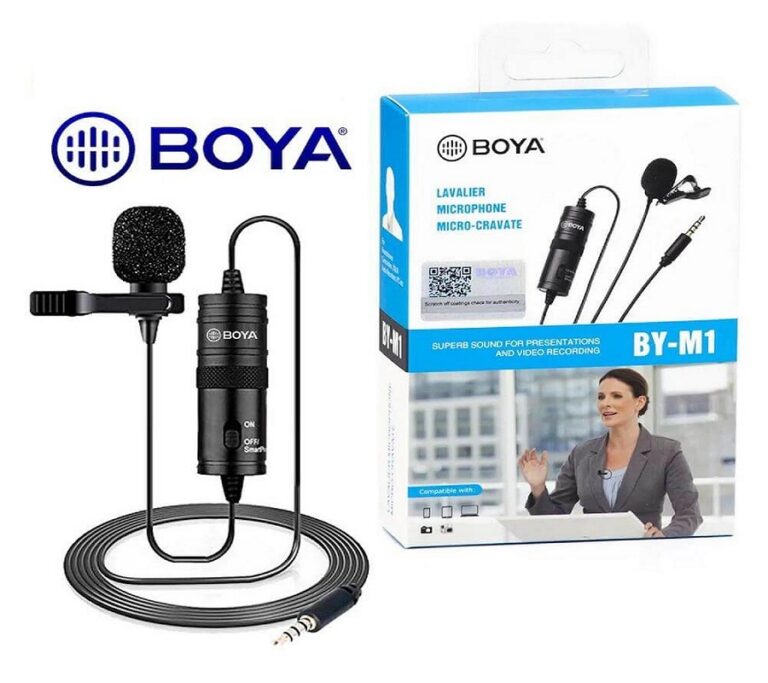
BOYA BY M1 lavalier microphone
The BOYA BY M1 lavalier microphone is available at TechnoKing. This is a lavalier (clip-on) type microphone that can be used to record video with a smartphone, as well as with a compatible camera and other compatible devices. The BOYA BY M1’s cable is approximately 6 metres long. A long cable is especially practical when the camera or phone is placed a certain distance away from the speaker. The microphone clips onto clothing and lets the user keep their hands free. This makes it a practical choice for video blogs, interviews, online lessons, lectures, and other conversational content.
BOYA microphone for video
BOYA is a well-known brand in the field of photo and video audio equipment and produces various types of microphones. A BOYA microphone for video can be used by an independent content creator as well as by a small business, a teacher, a journalist, or another user. The BOYA BY M1 is an especially simple-format solution for those who need a compact lavalier (clip-on) microphone. Using it does not require setting up a large audio system. The main thing is to attach the microphone correctly, connect it to a compatible device, and check the sound before starting to record.
Microphone with a 6-metre cable
When choosing a lavalier microphone, the cable length has practical importance. The BOYA BY M1 available at TechnoKing is equipped with an approximately 6-metre cable. This allows you to place the camera or phone a few metres away from the speaker. Such a length is especially useful for full-body videos, presentations, recording lessons, and other situations where the camera does not stand very close to the person. When using the cable, it is important to position it so that it does not hinder movement and does not become overly taut.
Microphone for YouTube videos
In a YouTube video, the viewer often listens to the author for several minutes or even longer. Therefore, the sound must be clear and comfortable to listen to. A microphone for YouTube videos is especially needed in talking, review, lesson, and product-presentation formats. A lavalier microphone is a good choice if there is one main speaker in the video. The microphone clips onto clothing, and when the camera position changes, the audio source still stays close to the person. This is especially convenient for regularly recording videos at home or in a small studio.
Microphone for TikTok and Instagram videos
TikTok and Instagram Reels are short video formats, but sound quality matters here too. If a person is speaking in the video, poorly recorded audio makes it harder for the viewer to take in the information. A microphone for TikTok videos can be especially useful when creating educational content, product reviews, expert videos, and advertising material for small businesses. The same applies to Instagram Reels and Facebook videos. If the videos are created with a smartphone, be sure to verify compatibility with the phone before buying a microphone.
Microphone for a blogger
For a content creator, a microphone can become one of the main working accessories. A microphone for a blogger is especially important when a significant part of the content is based on speaking. This can be a review, tips, an interview, an educational video, or everyday content created for social media. A lavalier microphone is practical for a blogger because it is small and does not take up much space in the frame. It is also possible to attach it to clothing relatively unnoticeably.
Microphone for an interview
A microphone for an interview should be chosen correctly according to the shooting format. If one person is speaking and one microphone is used, a lavalier microphone can be a simple and practical choice. Placing the microphone close to the speaker helps you record the sound better. If two people are speaking in the interview, two separate microphones or another suitable audio system may be needed. Therefore, when choosing equipment for a specific shoot, you should determine in advance how many people’s voices you need to record.
Microphone for online lessons
In online education, audio quality is especially important. The listener must hear every word well. A microphone for online lessons can be used by teachers, trainers, lecturers, and authors of online courses. A lavalier microphone allows the teacher to move a certain distance away from the camera while the speech is still recorded close to the microphone. This is especially practical when a person moves during the lesson, works at the board, or shows various objects.
Microphone for recording a lecture
When recording a video or audio of a lecture, the main goal is to capture the speech clearly. If the recording device is on the other side of the auditorium, its built-in microphone may significantly pick up the room’s echo and other sounds. A lavalier (clip-on) microphone for a lecture is placed directly on the lecturer. The BOYA BY M1, with its 6-metre cable, is especially practical in a space where the camera must stand a certain distance away from the lecturer.
Microphone for an online course
When creating an online course, you may need to record several videos. If the sound quality changes significantly in each video, the final course comes out less consistent. Having your own microphone for an online course allows you to record all the lessons under similar technical conditions. If you shoot the videos in the same space, you can set up the camera, lighting, and microphone in advance. This also simplifies the process of recording new lessons in the future.
Microphone for business
Today, businesses increasingly create video content on their own. This can be a product presentation, an employee’s comment, an explanation of a service, advice for a customer, or a short video to be published on social media. A microphone for business allows you to better control the audio part of videos recorded in an office or a shop. A small lavalier microphone is especially practical because there is no need to set up a large studio audio system.
Microphone for product reviews
In a product review, the author often speaks in front of the camera and simultaneously shows the item. In such a case, a handheld microphone may be inconvenient. A lavalier microphone for product reviews clips onto clothing, and both hands remain free. This is especially practical for video reviews of electronics, tools, cosmetics, clothing, and other products.
Where should we attach a lavalier microphone?
A lavalier microphone is usually attached to the upper part of the clothing. It is desirable for the microphone to be close enough to the mouth, but it should not rub against the clothing. If the microphone is placed too low, the speech may be recorded relatively weakly. If it constantly touches the clothing, an unwanted rustling may appear in the recording. Before shooting, it is advisable to record and listen to a test audio. This will allow you to adjust the microphone’s position before starting the main recording.
How can we get better sound with a lavalier microphone?
Even a good microphone requires correct use. First of all, choose a quiet environment if that is possible. Attach the microphone correctly to the clothing. Make sure the cable is not taut and that nothing touches the microphone during recording. Then make a test recording. Listen to both the speech and the background sound. If the sound is too low or noisy, fixing the problem is much easier before recording the video than when processing the finished material.
External microphone or a phone’s microphone?
A phone’s built-in microphone gives quite good results in many situations, especially when a person is close to the phone. The problem more often arises as the distance increases. If the phone is on a tripod and the speaker is a few metres away, the built-in microphone picks up more of the surrounding sound. An external lavalier microphone reduces this problem by being placed close to the sound source. Therefore, for recording speech at a distance from the camera, an external microphone is a practical choice.
Wired or wireless microphone?
Wired and wireless microphones each have their own advantages. A wired lavalier microphone is a relatively simple system and does not require connecting a separate transmitter and receiver. A long cable allows you to move a certain distance away from the camera. A wireless system, on the other hand, provides more freedom of movement, though it has its own technical requirements. The BOYA BY M1 featured in TechnoKing’s current microphone category is a wired lavalier microphone. If the main shoots take place in one space, a 6-metre cable can be practical for many types of content.
What does an Omnidirectional microphone mean?
The BOYA BY M1 is an Omnidirectional type lavalier microphone. This means that the microphone’s capsule captures sound from various directions. This type of construction is especially common in lavalier (clip-on) microphones. The user does not need to aim the microphone precisely in a specific direction. At the same time, the level of ambient noise still matters, because in a very noisy space the environment will affect any microphone’s recording.
The microphone’s frequency range
The BOYA BY M1’s stated frequency range is approximately 65 Hz to 18 kHz. This range is calculated for recording conversational sound. Technical specifications are useful when comparing different models with one another, though the quality of the final recording is affected by the recording environment, the microphone’s position, the audio device, and subsequent processing as well.
3.5 mm microphone
The BOYA BY M1 uses a 3.5 mm type audio connection. This is important for checking compatibility. Some cameras, computers, and other devices have a 3.5 mm audio jack. Many models of modern smartphones no longer have such a port. In this case, a suitable USB C or other type of adapter may be needed. When choosing an adapter, it is important to make sure that it supports transmitting the external microphone’s audio signal.
How should we choose a microphone?
When choosing a microphone, first determine what type of content you are creating. If one person is speaking in front of the camera, a lavalier microphone is one of the most practical choices. Then check compatibility with your camera, phone, or computer. Consider the cable length. If the camera will be a few metres away from the person, a short cable may turn out to be insufficient. Also consider the recording environment. If you mostly work in a quiet room, the requirements will be different from recording on the street or in a very noisy space.
What should we check before using a microphone?
Before starting the main recording, a few simple checks are advisable. Make sure the microphone is connected to the device correctly. Check whether the camera or phone is actually using the external microphone. Make a short test recording. Listen to the sound with headphones, if you have the possibility. Check the microphone’s placement and the cable. Only after this, begin recording the main video. Such a simple procedure significantly reduces the risk of shooting a video and later discovering that the sound was not recorded correctly.
Buying a microphone at TechnoKing
At TechnoKing you can choose a microphone for creating photo and video content. The microphone category features the BOYA BY M1 lavalier (clip-on) microphone, which is equipped with a 6-metre cable and can be used with a compatible smartphone, camera, and other audio devices. If you are looking for a lavalier microphone, a lavalier (clip-on) microphone, a lavalier microphone, a microphone for a phone, a microphone for video, or a BOYA microphone, pay special attention to compatibility with your device when choosing. A correctly chosen microphone will help you record speech in your video more clearly and be less dependent on the camera’s or phone’s location.
Frequently asked questions about microphones
What is a lavalier microphone?
A lavalier microphone is a small clip-on microphone that attaches to clothing and is mainly used for recording a person’s speech.
Are a lavalier microphone and a lavalier microphone one and the same?
Yes. In practice, a lavalier microphone, a lavalier (clip-on) microphone, and a lavalier microphone describe one type of compact clip-on microphone that attaches to clothing.
Can the BOYA BY M1 be used with a phone?
It is possible with a phone that has a suitable audio connection. If your smartphone does not have a 3.5 mm jack, you may need a suitable audio adapter.
Can the BOYA BY M1 be used with a camera?
The microphone is also designed to be used with compatible cameras and other recording devices. Before using it with a specific camera, verify the compatibility of the audio connector.
How many metres is the BOYA BY M1’s cable?
The TechnoKing product lists an approximately 6-metre cable.
Is a lavalier microphone suitable for YouTube videos?
Yes. Especially when there is one main speaker in the video and the camera is a certain distance away from them.
Can I use a lavalier microphone to record an online lesson?
Yes. A lavalier (clip-on) microphone is practical for recording online lessons, lectures, and video courses.
Is the BOYA BY M1 suitable for an interview?
For recording one speaker, a lavalier microphone is a practical choice. If you need to record several people’s voices separately at the same time, additional microphones or another audio system may be needed.
Why is an external microphone better for video?
The main advantage of an external microphone is that it can be placed closer to the sound source. This is especially important when the camera or phone is placed away from the speaker.
Does a lavalier microphone work for TikTok and Instagram videos?
Yes. When connected to a compatible smartphone, a lavalier microphone can be used to record videos for TikTok, Instagram Reels, and other social networks.
How do I attach a lavalier microphone?
A lavalier microphone is usually attached to the upper part of the clothing. The microphone should be relatively close to the speaker’s mouth and should not rub against the clothing.
How do I know whether the external microphone is working?
Before starting the shoot, make a short test recording and listen to the sound. This is the simplest way to check the microphone’s connection and position.